
Rollino Casino Design: The Circus Theme Under the Microscope
 Available in GB
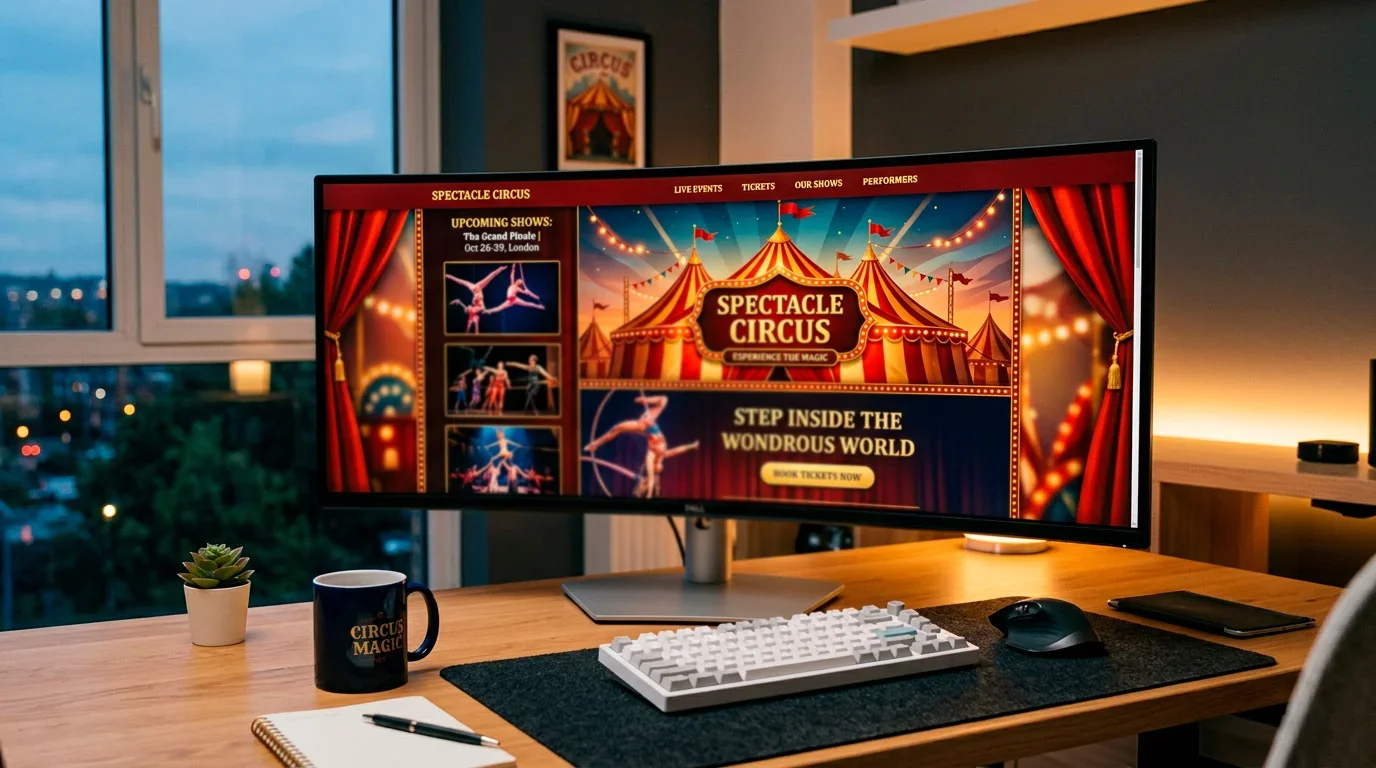
Rollino Casino Design: Circus Theme Under the Lens
I have reviewed hundreds of online casino interfaces over nine years, and most fall into two camps: sterile corporate minimalism or visual chaos that makes your eyes ache. Rollino lands somewhere unexpected. The circus theme — big-top colours, whimsical mascots, carnival-style banners — is polarising by design. Some players find it charming; others click away within seconds. After spending weeks navigating the platform across devices, I have thoughts on both sides.
What strikes me first is the commitment. This is not a token background image slapped on a generic template. Rollino’s visual identity runs deep — from the animated ribbon headers to the illustrated category icons and the neon-lit lobby. The palette leans on deep purples, warm golds and electric reds, creating a theatrical atmosphere that stands out in a market flooded with identikit dark-mode dashboards. Whether that theatricality improves usability or hinders it is the real question, and that is exactly what this breakdown covers.
Roughly 80% of online gamblers now access platforms through smartphones, which means any design critique has to start with whether a theme this bold actually scales down to a five-inch screen. The short answer: mostly yes, with caveats. The longer answer involves menu depth, filter logic, load behaviour and a handful of friction points that deserve a closer look. Symphony Solutions put it well when they argued that 2026 rewards precision over scale — and casino UX is no exception to that principle.
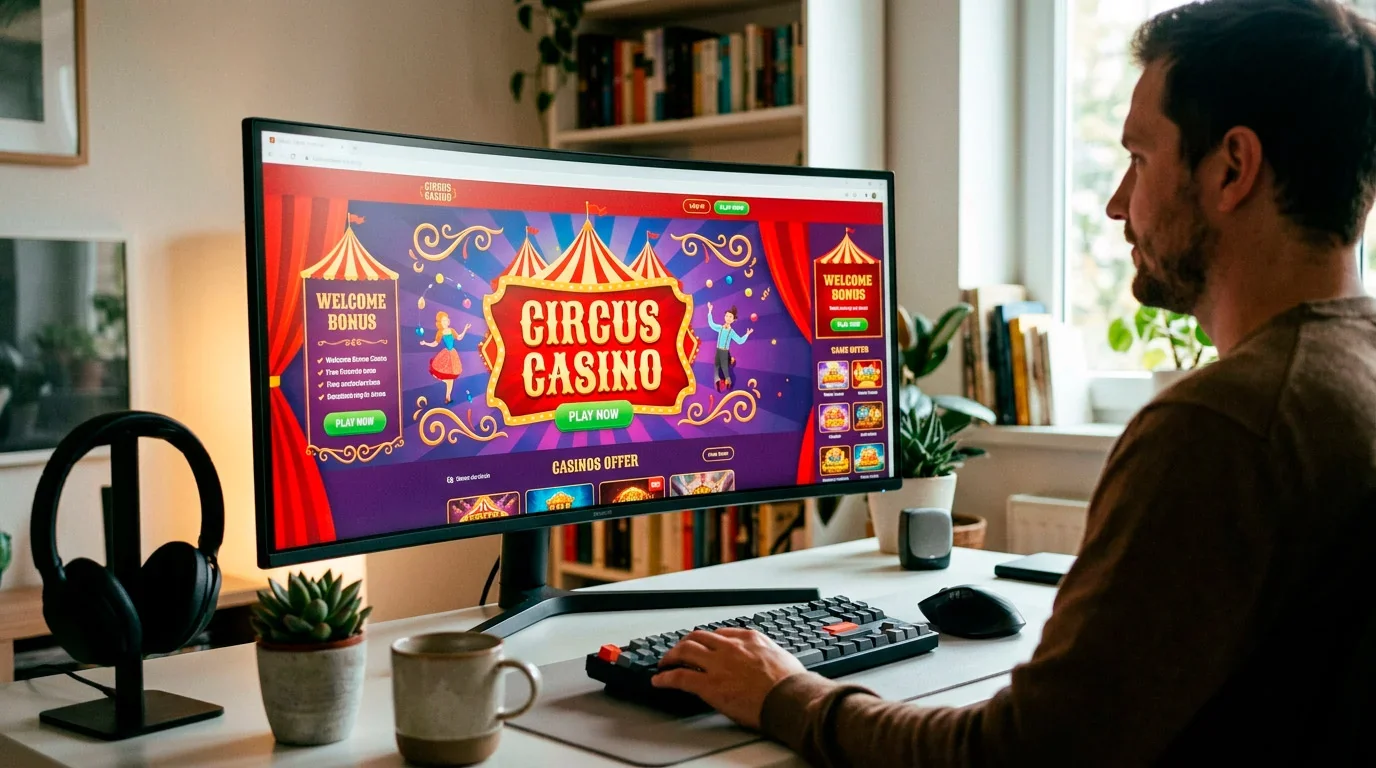
Desktop Interface: Layout, Menus and Game Filters
A few years ago, I audited a casino platform where finding the blackjack lobby required six clicks and a prayer. Rollino is not that bad, but it is not frictionless either. The desktop layout follows a fairly standard three-zone structure: a top navigation bar with account controls, a left-hand sidebar for game categories, and a central content area where the lobby and promotions live. So far, so predictable.
The top bar handles the essentials — balance display, deposit shortcut, profile access — without clutter. Where things get more interesting is the sidebar. Rollino groups its catalogue into broad categories: slots, live casino, table games, new releases, and a handful of provider-specific tabs. Each category loads a grid of game tiles with thumbnail art and the provider name underneath. The visual density is high. On a 1920×1080 monitor, I counted roughly 30 tiles visible without scrolling, which is above average for the sector. That density works if you already know what you want; it overwhelms if you are browsing.
The filtering system is where the cracks show. You can sort by provider or by popularity, but there is no volatility filter, no RTP sorting, and no way to search by theme or feature (like “megaways” or “bonus buy”). For a library reportedly exceeding several thousand titles, the absence of granular filters feels like an oversight. Competitors operating on similar platforms have solved this with tag-based filtering — Rollino has not adopted it yet.
Search works, but only if you know the exact game name. Typing “gates” pulls up Gates of Olympus variants, which is fine. Typing “high rtp” returns nothing. The search bar is purely a name-match tool, not a discovery engine. Given that 56% of iGaming companies now rank AI integration among their top three priorities, it is only a matter of time before smarter search and recommendation layers become table stakes. Rollino’s current approach feels a generation behind what the technology already allows.
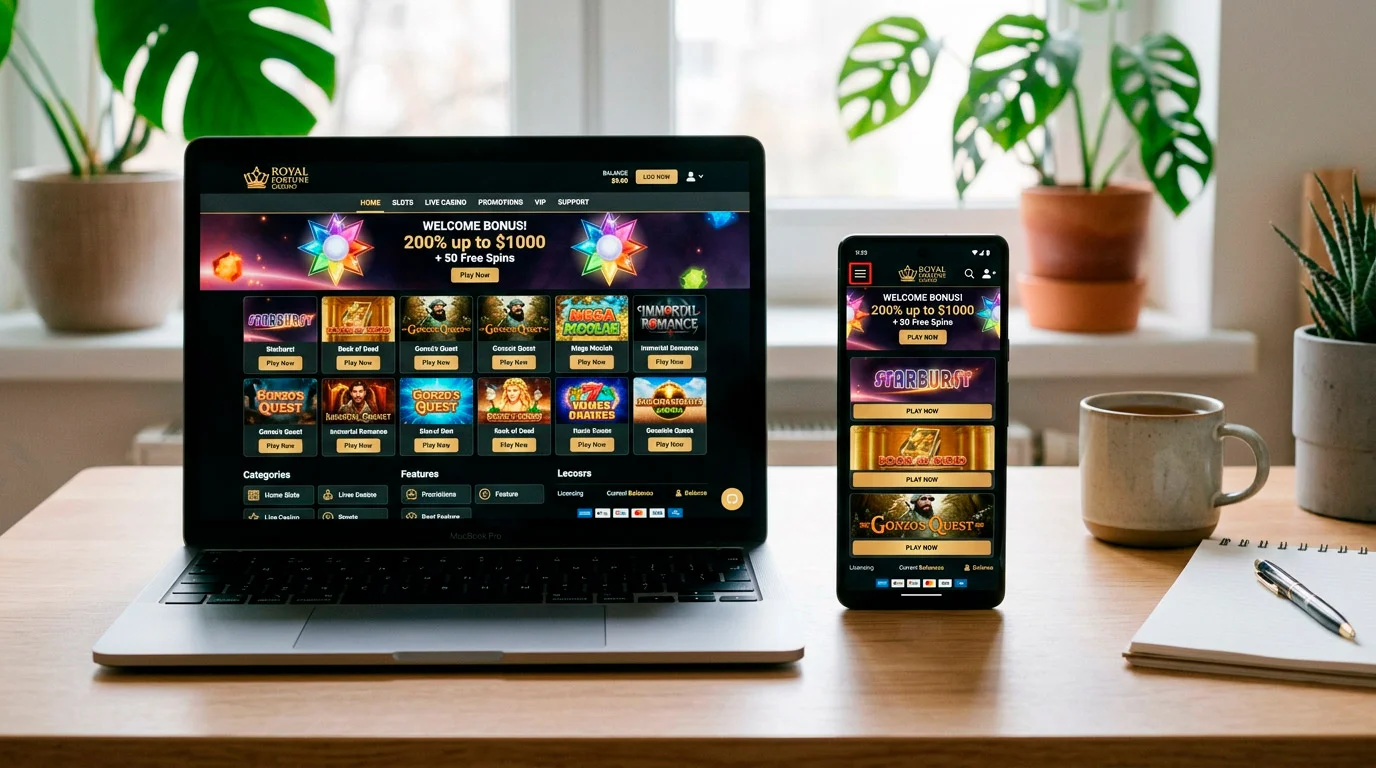
One detail I do appreciate: the mobile experience mirrors the desktop structure closely, which suggests a single responsive codebase rather than a separate mobile build. That consistency matters — players who switch between devices mid-session should not have to relearn the navigation.


Load Times and Technical Performance
Pretty means nothing if the page takes five seconds to render. I ran Rollino through a standard set of checks across three browsers — Chrome, Firefox and Safari — on both a wired desktop connection and a mid-range 4G mobile signal. The results were mixed in a way that tells a specific story about how the platform handles its visual assets.
On desktop with a stable broadband connection, the initial lobby load came in around 2.8 seconds to first contentful paint. That is acceptable by 2026 standards but not impressive — many competitors hit sub-two-second loads by lazy-loading game thumbnails below the fold. Rollino loads the full visible grid eagerly, which means the circus-themed header animations, the promotional banner carousel and 30-odd game tiles all compete for bandwidth simultaneously. The result is a brief flash of layout shift as images slot into place, followed by a stable view. Not terrible, but noticeable.
Mobile performance tells a sharper story. On 4G, the same lobby load stretched to 4.1 seconds on my test device. The animated elements that feel theatrical on desktop become genuine friction on a constrained connection. The promotional banner carousel, which auto-rotates with a fade transition, contributed measurably to the delay. Disabling image preloading in the browser’s developer tools shaved nearly a full second off, which suggests the banner images are not optimally compressed.
Game launch times were more consistent. Slots loaded within 1.5 to 3 seconds regardless of provider, which tells me the game iframes are handled by the providers’ CDNs rather than Rollino’s own infrastructure. Live casino tables connected in under two seconds, which is standard for Evolution and Pragmatic Play streams. No complaints there.
The one technical annoyance worth flagging: session persistence. Twice during testing, navigating back from a game to the lobby dumped me at the top of the page rather than returning to my scroll position. It is a small thing, but when you are browsing a catalogue this large, losing your place is genuinely irritating.


Overall UX Verdict and Room for Improvement
If I had to summarise Rollino’s design philosophy in one sentence, it would be this: strong identity, average execution. The circus theme gives the platform a personality that most offshore casinos lack entirely — and in a market where brand differentiation matters more than ever, that counts for something. But personality without polish is just noise.
The positives are real. Visual consistency across devices. A colour palette that creates atmosphere without sacrificing readability. Category organisation that covers the basics. And a game tile design that foregrounds provider information, which helps informed players make quicker decisions. These are not accidental choices; someone on the design team understands what matters to returning users.
The negatives are equally real. Filter limitations that force players to scroll through hundreds of tiles instead of narrowing by meaningful criteria. Search functionality that cannot handle anything beyond exact name matches. Load performance that lags behind leaner competitors, especially on mobile. And a handful of session-persistence quirks that break browsing flow.
What would I change? Three things, in order of impact. First, implement tag-based game filtering — volatility, RTP range, feature type — so that the catalogue becomes navigable rather than just scrollable. Second, compress the promotional banner assets and defer their load until after the game grid renders; players come for the games, not the banners. Third, fix the scroll-position reset on back-navigation. That last one is a thirty-minute engineering fix that would eliminate a daily annoyance for regular users.
Rollino’s design is not broken. It is incomplete. The foundation — a distinctive theme, responsive layout, functional navigation — is solid enough to build on. The question is whether the team behind it treats UX as an ongoing engineering priority or a one-time launch deliverable. In 2026, the platforms that iterate on interface quality monthly will outpace those that redesign annually. Rollino has the raw material; it needs the refinement cycle.
Can you switch the Rollino interface language to English?
Rollino supports multiple interface languages. The platform typically detects your browser language setting automatically, but you can also switch manually through the language selector in the footer or account settings area. English is available as a default option for UK-based users.
How fast do pages load on Rollino Casino?
Desktop load times average around 2.8 seconds for the main lobby on a standard broadband connection. Mobile performance on 4G is slower, typically around 4 seconds, largely due to unoptimised promotional banner images loading alongside the game grid. Individual game launches are faster, usually between 1.5 and 3 seconds regardless of device.
Prepared by the Rollino Casino editorial staff.