
iGaming Trends 2026: AI, Regulation and How Rollino Adapts
 Available in GB

iGaming Trends 2026: What Moves the Industry — and Rollino’s Role
Every January, the iGaming conference circuit lights up with predictions about the year ahead. Most of those predictions are variations on the same three themes: technology will change everything, regulation will get stricter, and the customer will demand more. The frustrating thing is that these predictions are usually right — they are just too vague to be useful. So instead of forecasting, I want to trace the specific shifts that are already reshaping the industry in 2026 and examine how a mid-tier Curaçao-licensed operator like Rollino navigates them.
The numbers set the stage. Regulation now ranks as approximately 20% of all top concerns among iGaming executives, overtaking technology costs and market saturation. Influencer marketing dominance in iGaming has dropped by ten percentage points since 2023, with brand reputation now mattering more than bonus size or sponsored content. And 56% of surveyed iGaming companies list AI integration as a top-three business priority. These are not future possibilities — they are current realities that operators ignore at their own risk.

AI Integration in iGaming: From Player Protection to Personalisation
I remember when “AI in casinos” meant a chatbot that could not understand your withdrawal question. In 2026, the conversation has moved considerably past that. Emilia Kurzynska, Deputy Team Lead of the Anti-Fraud Team at SOFTSWISS, put it clearly: AI will be central to the future of responsible gambling, making player protection more precise by detecting harmful patterns early while helping operators meet regulatory standards. That is not a marketing claim — it is a description of systems already in deployment at scale.
The practical applications fall into three buckets. First, player protection: AI models that monitor betting patterns in real time, flagging behaviour changes that correlate with problem gambling — sudden stake increases, chasing losses across sessions, extended play duration without breaks. These systems do not replace human judgment, but they surface signals that no human compliance team could catch manually across thousands of concurrent sessions.
Second, personalisation: game recommendations, dynamic bonus offers and interface adjustments tailored to individual player behaviour. This is the Netflix model applied to casinos — showing you what you are statistically likely to enjoy rather than presenting a generic lobby. The privacy implications are real and unresolved, but the commercial incentive is powerful enough that adoption is accelerating regardless.
Third, fraud detection: identifying multi-accounting, bonus abuse, collusion in poker and suspicious transaction patterns. AI handles the volume problem — processing millions of data points per hour — while human analysts handle the judgment calls. The combination is already standard at tier-one operators and is filtering down to the mid-market.
Where does Rollino stand? The platform has not publicly detailed its AI capabilities, which is typical of operators in the Curaçao-licensed tier. The larger question is whether the aggregator platforms and provider networks that power Rollino’s game library are themselves implementing AI-driven player protection — and increasingly, they are. SOFTSWISS, which provides back-end infrastructure to numerous operators, has integrated AI-based responsible gambling tools into its platform layer, meaning operators connected to their infrastructure benefit indirectly even without building custom systems.


Regulation 2026: Global Pressure on Offshore Casinos
James Coxon, COO of Gaming Innovation Group, made an observation that has stuck with me: the most successful businesses are the ones that embrace regulation early, build around it, and use it as a foundation for growth rather than a barrier. That perspective is easy to agree with and harder to execute, particularly for offshore operators whose business models were built on regulatory arbitrage.
The regulatory pressure in 2026 is coming from multiple directions simultaneously. The Curaçao reform eliminated the old master/sub-licence system and imposed direct oversight requirements on every operator. The UK continues to tighten its framework — slot stake caps, affordability checks and enhanced responsible gambling obligations are all in effect. Germany’s GGL is pursuing payment-blocking orders against unlicensed operators. And jurisdictions that were historically permissive — including parts of Latin America and Asia — are introducing licensing frameworks that create new compliance burdens for operators accustomed to light-touch oversight.
For Rollino, operating under the reformed Curaçao licence, the regulatory trajectory creates a specific set of pressures. The reform raised standards, but the Curaçao framework still falls short of what the UKGC, MGA or GGL require. As more jurisdictions adopt stricter rules, the competitive advantage of a Curaçao licence — lower compliance costs, fewer restrictions on product design — narrows. The operators who thrive will be those who treat the reform as a floor rather than a ceiling, investing in compliance infrastructure that exceeds the minimum requirements.
The influencer marketing decline is connected to this regulatory shift. As regulators scrutinise how casinos acquire customers, the riskiest acquisition channels — unlicensed affiliates, influencers who fail to disclose commercial relationships, targeted advertising to vulnerable demographics — become liabilities rather than assets. Brand reputation, built on transparent practices and verifiable fair play, is replacing promotional volume as the primary driver of sustainable growth.

Technological Developments: EU AI Act and Real-Time Compliance
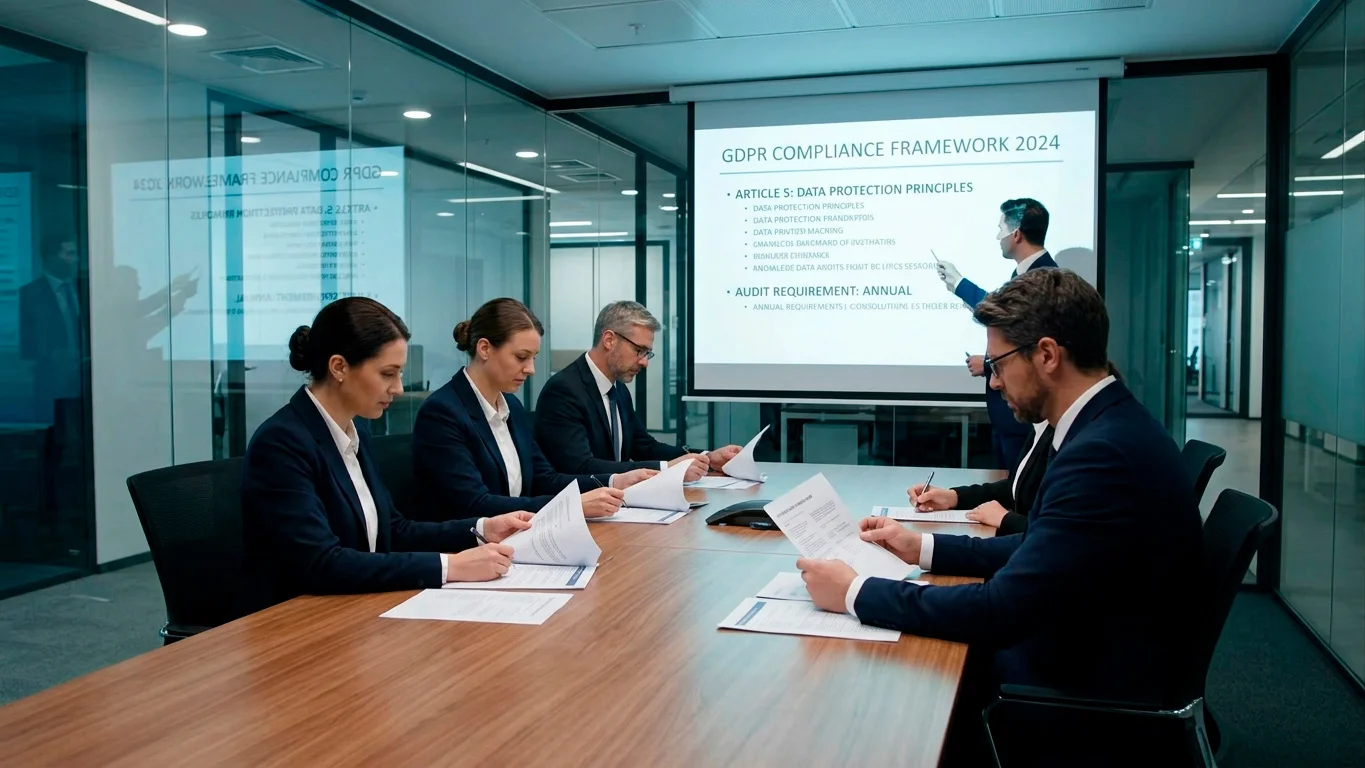
The EU AI Act becomes fully applicable in August 2026, and its impact on iGaming deserves more attention than it has received. The Act classifies AI systems by risk level, and while gambling-specific AI has not been formally categorised as high-risk in the current framework, the systems that iGaming operators use — algorithmic player profiling, automated risk assessment, dynamic pricing — fall squarely within the Act’s scope if they produce decisions with significant effects on individuals.
What this means in practice: AI systems used by operators in EU-facing markets will need to be auditable, explainable and subject to human oversight. A model that flags a player for responsible gambling intervention must be able to explain why it flagged that specific player. A recommendation engine that personalises bonus offers must document its decision logic in a way that regulators can review. Symphony Solutions articulated the standard clearly: 2026 will not reward scale but precision, with the winners being those who build architectures that explain every model decision, verify every payment in real time, and adapt every session to the player behind it.
For Curaçao-licensed operators like Rollino, the EU AI Act creates an indirect but significant pressure. Even platforms not physically based in the EU may need to comply if they process data from EU residents or if their provider networks and aggregators are EU-based. The compliance cost is non-trivial, and it disproportionately affects smaller operators who lack dedicated legal and engineering resources.
The real-time compliance layer is the technological frontier. Systems that can verify player identity, assess affordability, monitor session duration, flag suspicious transactions and adapt game offerings — all in real time, all in compliance with multiple overlapping regulatory frameworks — represent a significant engineering challenge. The operators who solve it will have a durable competitive advantage. Those who do not will find themselves increasingly squeezed between regulatory demands they cannot meet and player expectations they cannot satisfy.
Rollino’s challenge, like every mid-tier operator’s, is to position itself on the right side of this divide. The tools exist. The provider infrastructure is increasingly capable. The question is whether the investment in compliance technology matches the investment in game acquisition and marketing — because in 2026, the former determines survival more than the latter determines growth.
How does the EU AI Act affect online casinos like Rollino?
The EU AI Act, fully applicable from August 2026, requires AI systems that make decisions affecting individuals to be auditable, explainable and subject to human oversight. For iGaming operators, this impacts algorithmic player profiling, automated risk assessments and personalised offer engines. Curaçao-licensed platforms serving EU residents may fall within scope if they process EU player data or rely on EU-based provider infrastructure.
What role does AI play in player protection at modern casinos?
AI-driven systems monitor betting patterns in real time, flagging behaviour changes that correlate with problem gambling — such as sudden stake increases, loss-chasing across sessions and extended play without breaks. These systems supplement human compliance teams by processing millions of data points per hour, surfacing signals that manual monitoring would miss. Major infrastructure providers like SOFTSWISS have already integrated AI-based responsible gambling tools into their platform layers.
What regulatory changes does the iGaming industry expect in 2026?
Key developments include the full implementation of Curaçao’s LOK reform requiring direct operator licensing, continued tightening of UK gambling rules including slot stake caps and affordability checks, German enforcement actions against unlicensed operators, and the EU AI Act introducing auditability requirements for AI systems used in gambling. Regulation now ranks as approximately 20% of all top concerns among iGaming executives, overtaking technology costs and market saturation.
Created by the ”Rollino Casino” editorial team.