Rollino Casino Austria: Access, Bonuses and Legal Status 2026
 Available in GB

Rollino Casino in Austria: Access and Regulation
Austria is one of those markets where the legal framework says one thing and market reality says another. I have been tracking offshore casino access patterns across the DACH region for years, and Austria consistently produces the widest gap between regulation on paper and enforcement in practice. Understanding where Rollino fits into that gap requires a closer look at what Austrian law actually says — and what it conspicuously does not enforce.
Rollino operates under a Curaçao licence, reformed under the LOK framework that took full effect on 24 December 2024. It does not hold an Austrian concession. In Austria, the legal online gambling landscape is dominated by a single federal concession holder — a monopoly model that contrasts sharply with the multi-licence approaches in the UK, Germany and most other EU member states. Despite that monopoly structure, Austrian players routinely access dozens of offshore platforms, and Rollino is among them.
Europe commands nearly 57% of global online gambling revenue, making it the largest regional market by a considerable margin. Austria contributes to that figure disproportionately for its population size, driven partly by high internet penetration, partly by high disposable income, and partly by the sheer number of offshore operators that accept Austrian traffic. The question for players is not whether they can access Rollino — they can — but what regulatory protections they forfeit by choosing a platform outside the concession system.
Austrian Gambling Law and Offshore Casinos
Last year, a reader from Vienna asked me a question I have heard dozens of times: “If so many people use offshore casinos in Austria, how can it be illegal?” The answer is nuanced, and the nuance matters more than most casino review sites acknowledge.
Austria’s Glücksspielgesetz (GSpG) establishes a concession-based system. The federal government issues a limited number of concessions for online gambling, and historically, only one operator has held the primary online casino concession. This monopoly model has faced repeated legal challenges at the EU level, with Austrian courts and the European Court of Justice trading rulings on whether the system is proportionate and consistent with EU single-market principles. Several Austrian courts have ordered refunds to players who lost money at offshore casinos, arguing that those operators lacked valid Austrian authorisation — a legal theory that has produced real payouts but inconsistent case law.
For the player, the practical landscape looks like this: there is no criminal penalty for individuals who use offshore platforms. Enforcement targets operators, not users. But the absence of personal liability does not create a right to play, and it does not guarantee that Austrian financial regulators will assist with dispute resolution if a withdrawal goes wrong at an unlicensed platform.
The situation in Germany shares some structural parallels — both countries have restrictive licensing frameworks, both see widespread offshore access, and both focus enforcement on operators rather than players. But Austria’s monopoly model is more rigid than Germany’s multi-licence GlüStV framework, which makes the regulatory gap between domestic and offshore options even wider. Austrian players using Rollino have no access to the domestic complaint mechanisms, no connection to the Spielerschutz system, and no regulatory backstop if the operator’s Curaçao licence fails to deliver adequate oversight.


Bonus Offers for Austrian Players
Bonus structures at offshore casinos tend to be more aggressive than what concession-based operators can offer, and that disparity is not accidental. Domestic operators in regulated markets face restrictions on bonus size, advertising and wagering terms. Offshore platforms face fewer such constraints, which translates into larger headline numbers — multi-tiered welcome packages, reload bonuses and loyalty perks that domestic competitors simply cannot match under their licensing conditions.
Rollino’s bonus structure applies uniformly to Austrian players. The welcome package, wagering requirements and promotional calendar do not vary by country of residence. What does vary is how those bonuses interact with Austrian players’ deposit and withdrawal preferences. Euro-denominated accounts are standard, so there is no currency conversion overhead. But the wagering terms deserve the same scrutiny regardless of where you are based — the mechanics of a 35x playthrough requirement do not change because you are logging in from Graz instead of London.
One point worth flagging for Austrian players specifically: the absence of GSpG-mandated bonus restrictions means that Rollino can offer features — like bonus-buy slots, auto-play and uncapped deposit bonuses — that would not be available on a domestically licensed platform. Whether that flexibility is an advantage or a risk depends entirely on the player’s self-discipline and gambling experience. The protections that concession-based operators are required to build in exist precisely because regulators concluded that unrestricted access to these features carries measurable harm potential.

Payment Methods for Players from Austria
Austrian banking infrastructure makes offshore deposits slightly less friction-prone than in Germany, though the direction of travel is toward tighter controls. The major Austrian banks — Erste Group, Raiffeisen, BAWAG — have not implemented the same systematic gambling transaction blocks that some German banks enforce, but individual card issuers may still decline payments to merchants coded as offshore gambling. The experience is inconsistent: one player’s Visa works fine, another’s is declined. There is no public policy document to consult; it depends on internal risk rules at the issuing bank.
E-wallets remain the most reliable option. Skrill and Neteller are widely used in Austria, handle euro natively, and do not apply the same merchant-category filtering that card networks sometimes trigger. For Austrian players who already use these services for other cross-border transactions, depositing at Rollino is mechanically straightforward.
Cryptocurrency is also available, and the Curaçao reform framework now requires tighter KYC checks for crypto transactions than the old master-licence system did. Bitcoin, Ethereum and USDT are all accepted. For Austrian players, the relevant consideration is tax treatment: Austrian tax law treats gambling winnings from games of chance as generally tax-free, but this applies most clearly to licensed operators. Winnings from offshore platforms may fall into a greyer zone, particularly for high-frequency players whose activity could be classified as income-generating rather than recreational. As with any jurisdiction-specific tax question, the sensible approach is to consult a Steuerberater if the amounts are material.
Withdrawal times follow Rollino’s standard processing schedule regardless of the player’s country. The key variable is the payment method: e-wallets and crypto tend to clear faster than bank transfers, which may take additional processing days when crossing from a Curaçao-based payment processor to an Austrian bank.

Can Austrian players access Rollino Casino?
Rollino does not block Austrian IP addresses, so the platform is technically accessible. However, Rollino does not hold an Austrian gambling concession under the Glücksspielgesetz. Austrian law focuses enforcement on operators rather than individual players, but using an unlicensed platform means forgoing domestic regulatory protections and dispute resolution mechanisms.
Which payment methods are available for Austrian users?
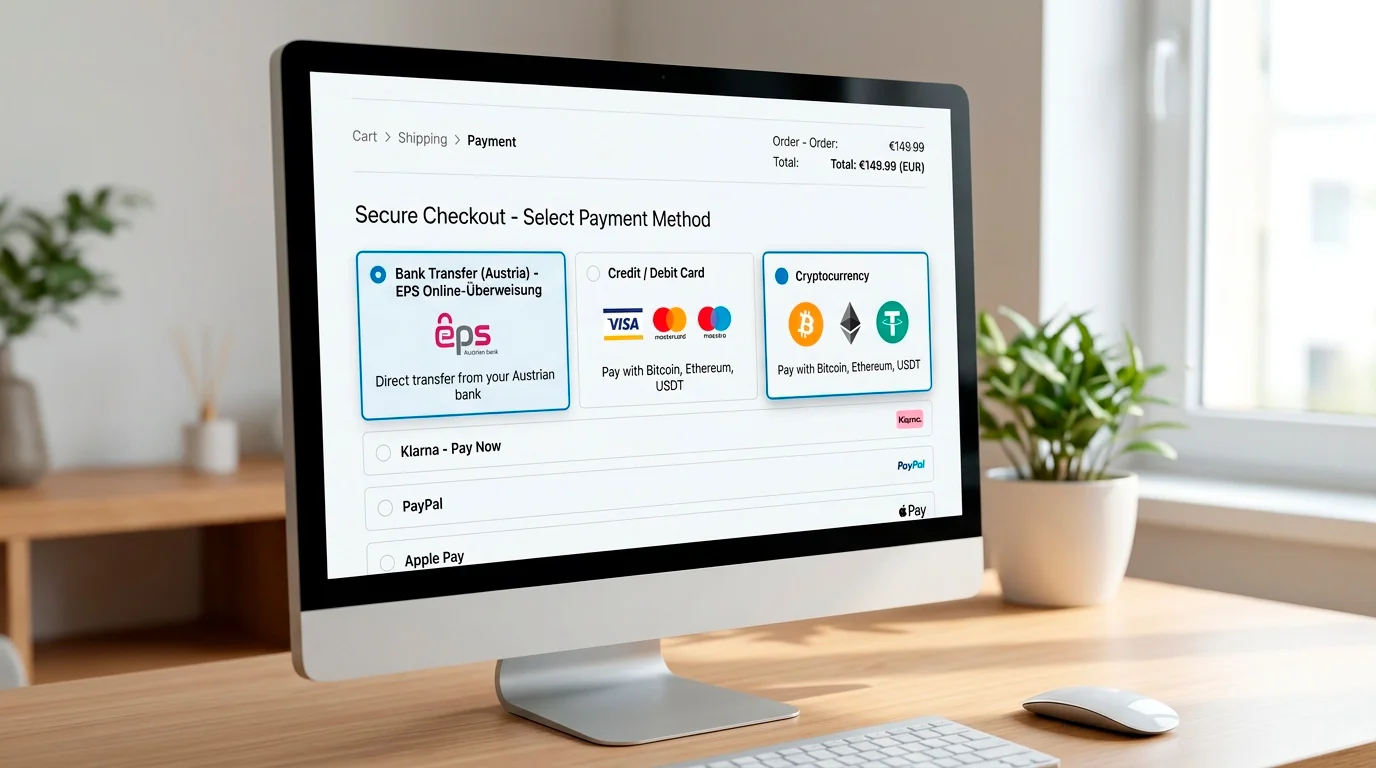
Austrian players can use Visa and Mastercard (subject to individual bank policies), e-wallets like Skrill and Neteller, and cryptocurrencies including Bitcoin, Ethereum and USDT. E-wallets tend to be the most reliable option, as some Austrian card issuers may decline transactions to offshore gambling merchants.
Created by the ”Rollino Casino” editorial team.