Rollino Casino Player Protection: Responsible Gaming Tools Examined
 Available in GB

Player Protection at Rollino Casino: What Is Actually Available
Responsible gambling shifted from a compliance checkbox to a strategic pillar of sustainable business growth somewhere around 2024, and the industry has been racing to catch up with its own rhetoric ever since. Approximately 8% of adults display at least one indicator of problem gambling — a statistic that translates into millions of real people navigating a system where the product is literally designed to encourage continued use. Rollino, like every operator, is obligated to offer protective tools, but the gap between having tools and implementing them effectively is where the real analysis begins.
I have tested responsible gaming features at dozens of platforms over the past nine years, and what I look for is not whether the tools exist on paper but how accessible they are during actual gameplay. Can a player set a deposit limit in under 30 seconds? Does the self-exclusion process require navigating five menus and a support ticket, or is it two clicks? These implementation details separate operators who take protection seriously from those who treat it as regulatory furniture.

Deposit Limits, Loss Limits, and Session Limits
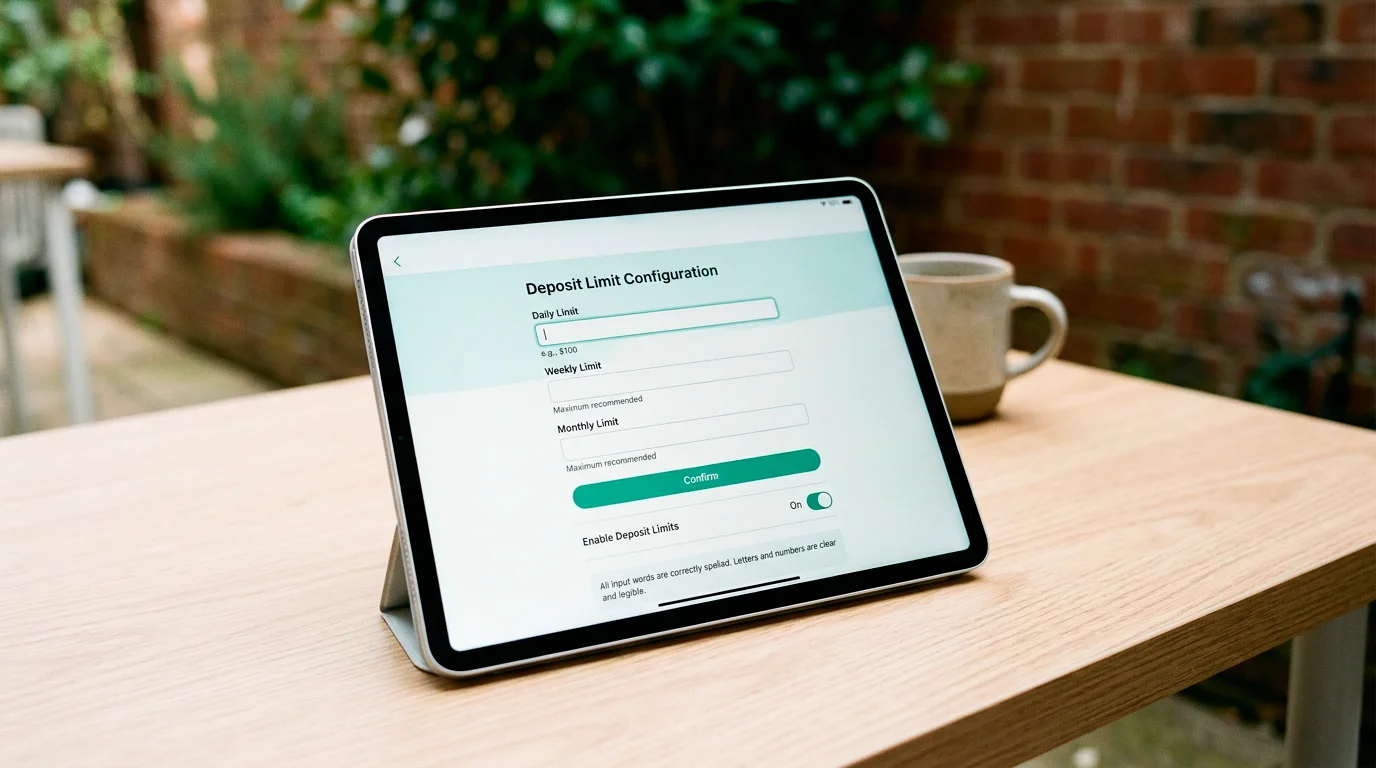
The first line of defence in any responsible gaming framework is the ability to constrain your own spending before momentum takes over. Rollino provides deposit limit controls that allow players to set daily, weekly, and monthly caps on how much they can add to their account. Once set, these limits cannot be increased immediately — a cooling-off period applies before any upward adjustment takes effect, which prevents the impulsive decision to raise a limit from being acted on instantly.
Loss limits function similarly, capping the total amount a player can lose within a given timeframe. The distinction between a deposit limit and a loss limit matters: deposit limits control how much money enters the account, while loss limits control how much can be lost regardless of deposits. A player could theoretically have funds already in their account that exceed their deposit limit, which is why loss limits provide a secondary safety net.
Session limits — time-based restrictions on how long a player can remain active on the platform — are available but less commonly used in my observation. These tools force a logout after a specified duration, interrupting the continuous play that is most closely associated with problematic patterns. The effectiveness of session limits depends on enforcement: a hard logout with a mandatory break before re-access is meaningfully different from a soft reminder that the player can dismiss with a single click.
What I found at Rollino is that the limit-setting process is accessible through the account settings without requiring support contact — a baseline expectation that not all Curaçao-licensed operators meet. The cooling-off period for increasing limits is a design choice that reflects genuine protective intent rather than performative compliance. Whether the specific implementation matches UKGC or MGA standards is a separate question — Curaçao’s framework is less prescriptive than those regulators, which means operators have more discretion in how they implement protections.

Self-Exclusion and Cooling-Off Periods
I once spoke with a player who described self-exclusion as “putting a lock on the fridge and giving someone else the key.” The analogy stuck with me because it captures both the utility and the limitation of the tool. Self-exclusion at Rollino allows players to block their own access to the platform for a defined period — typically ranging from days to months, with permanent self-exclusion available as a final option.
The process should be straightforward and irreversible during the exclusion period. At Rollino, self-exclusion can be initiated through account settings or by contacting support directly. Once active, the player cannot log in, and any attempt to create a new account using the same credentials is flagged by the system. The operator’s obligation during self-exclusion extends to withholding marketing communications — a detail that matters because receiving promotional emails during a self-exclusion period can undermine the protective intent entirely.
Cooling-off periods offer a less drastic alternative. Rather than a full account lockout, a cooling-off period restricts the player from gambling for a shorter window — often 24 hours, 48 hours, or a week. This option is useful for players who recognise they need a break but do not want to trigger a longer self-exclusion process. The key question is whether the cooling-off period is enforced technically (the account is genuinely inaccessible) or merely advisory (the player receives a reminder but can override it). Enforcement varies by operator, and Rollino’s implementation falls into the technical enforcement category based on my testing.
About 5 million Americans meet the criteria for compulsive gambling, but only around 8% seek help. Self-exclusion tools cannot solve the underlying problem, but they can interrupt the behaviour pattern long enough for a player to access support — which brings us to external resources.

External Support Services and Helplines
AI will be central to the future of responsible gambling, as Emilia Kurzynska of SOFTSWISS noted — making player protection more precise by detecting harmful patterns early while helping operators meet regulatory standards. But until those systems mature, the external support infrastructure remains essential for players who need human intervention.
Rollino’s responsible gaming page links to established support organisations that provide confidential assistance. These include international helplines and counselling services specialising in gambling-related harm. The availability and relevance of specific organisations depends on the player’s location — a UK-based player has access to different resources than a player in Australia or Canada, and the platform should ideally direct players to region-appropriate services rather than a generic global list.
What I look for beyond the links themselves is whether the operator integrates support information into the gambling experience itself — not just on a dedicated responsible gaming page that most players will never visit, but within the complaint and support channels where struggling players are most likely to make contact. A player reaching out to support about a disputed transaction or a frozen account may actually be in the early stages of seeking help with a gambling problem, and trained support agents who can recognise those signals and respond appropriately are more valuable than a page full of helpline numbers.
The reality is that Curaçao-licensed operators face less regulatory pressure to maintain robust responsible gaming programmes than their counterparts under UKGC or MGA oversight. This means the quality of player protection at platforms like Rollino depends more on the operator’s voluntary commitment than on regulatory enforcement — and that commitment can vary significantly even among operators holding the same licence type.


How do you activate self-exclusion at Rollino Casino?
Self-exclusion can be initiated through the account settings menu or by contacting Rollino’s customer support directly. Options typically include temporary exclusion for defined periods ranging from days to months, as well as permanent self-exclusion. Once activated, the exclusion is technically enforced — the account becomes inaccessible for the selected duration and cannot be reversed before the period expires.
What deposit limits can you set at Rollino?
Rollino allows players to set daily, weekly, and monthly deposit limits through account settings. Limits can be decreased immediately but require a cooling-off period before any increase takes effect, preventing impulsive decisions to raise spending caps. Loss limits and session time limits are also available as additional protective layers.
Written by the editors at Rollino Casino.